Skip to content

Wood-fired, set-and-forget

Pellet Grills

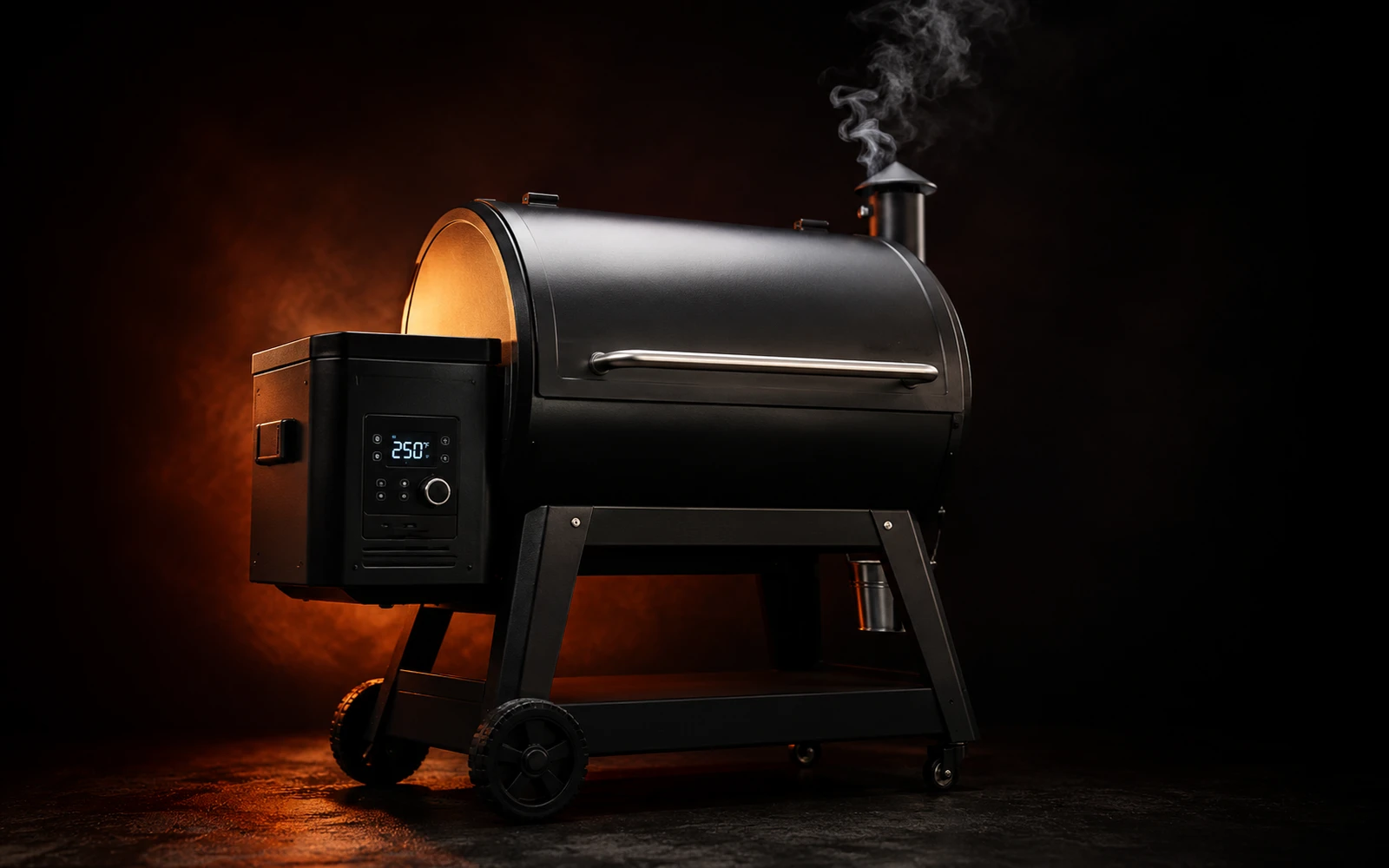
Pellet grills burn compressed hardwood pellets fed by an auger, giving you real wood smoke with digital, thermostat-like control. They're the easiest way to get into smoking without babysitting a fire, and the better units double as everyday grills. Here are our current picks across price points.

Editor's Pick

Traeger Pro 22

  • 572 sq in
  • 18 lb hopper
  • 180–450°F
  • WiFIRE app
  • 6-in-1

The all-rounder we'd hand a first-time pellet owner. WiFIRE lets you set temperature and monitor from your phone, the 572 sq in fits two racks of ribs, and it swings from low-and-slow brisket to a hot, fast burger. Not the cheapest, but the one with the deepest support and accessory ecosystem.

Price tierPremium
Best Value

Z Grills 700 Series (Dual-Wall)

  • 700 sq in
  • PID 3.0 control
  • Dual-wall insulated
  • 8-in-1

More cooking area than the Pro for less money, with PID temperature control and dual-wall insulation that helps it hold heat in cold weather. The trade-off is a smaller dealer and accessory network, but the cook quality punches well above the price.

Price tierMid-range
Most Grill For The Money

Pit Boss Navigator 850

  • 932 sq in
  • Flame Broiler sear
  • Digital control

Nearly 1,000 sq in and a sliding Flame Broiler plate that exposes the cook to direct flame for real searing, something most pellet grills can't do well. If you feed a crowd and want sear capability without a second grill, this is the value sear-zone pick.

Price tierMid-range
Premium

Traeger Woodridge Pro

  • 970 sq in
  • Super Smoke mode
  • Pellet sensor
  • WiFIRE

Traeger's newer flagship-tier build: big 970 sq in capacity, a dedicated Super Smoke mode for heavier smoke flavor, and a pellet-level sensor so you're not guessing about refills mid-cook. The pick if you want the most refined Traeger experience and the full app ecosystem.

Price tierHigh-end

Buying notes

What to weigh before you buy

  • Hopper size matters for long cooks. A bigger pellet hopper means fewer refills during an overnight brisket. Smaller hoppers are fine for weeknight cooking but get annoying on long low-and-slow sessions.
  • Searing is the weak spot. Most pellet grills top out around 450–500°F, which is fine for almost everything but light for a hard steak crust. Look for a dedicated sear function or open-flame zone if steaks are a priority.
  • WiFi is genuinely useful here. App control lets you adjust temperature and get done-alerts from inside the house during a multi-hour cook. It's the one place smart features earn their keep.
  • Cold weather costs pellets. Single-wall barrels lose heat in winter and burn more fuel; insulated or dual-wall designs hold temperature better if you grill year-round in a cold climate.
  • Accessory ecosystem is worth checking. Bigger brands have more covers, shelves, and replacement parts available, which matters over the life of the grill.

Affiliate links: the buttons above lead to Amazon and eBay listings. GrillGuide may earn a commission at no extra cost to you. Specs come from manufacturer info and can change, so confirm details on the retailer page.

Still deciding between fuel types?

Our buying guide breaks down pellet vs charcoal vs gas vs smoker so you can match the grill to how you actually cook.

Compare grill types